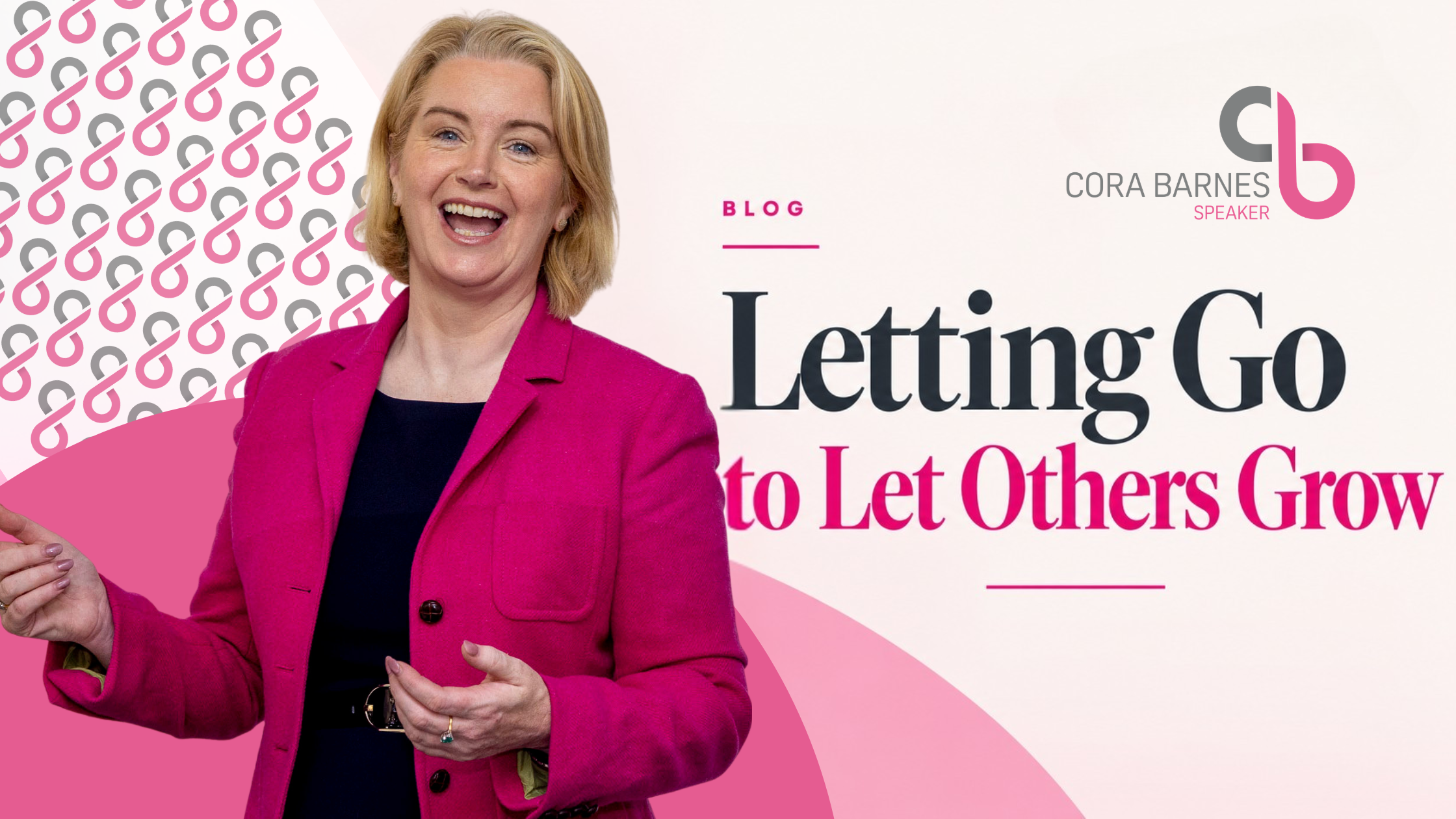
Why courageous leadership isn’t about doing everything yourself — it’s about creating the space for other people to become brilliant at what they do.
I’ve always believed that you cannot grow a business entirely on your own. But knowing that and actually letting go of things are two very different things.
When you’re a founder, being involved becomes second nature. In the early days, you do what needs doing because there may be nobody else to do it. You solve the problem. Make the decision. Find the client. Fill the gap.
Then the business grows, and eventually you have to ask a different question:
What am I still holding onto that someone else could help build better?
That question has become increasingly important to me. Because part of growing as a leader is recognising that the next stage of the business may not require you to do more. It may require you to trust more.
Last month, I wrote about being more intentional about where we invest our time. I’ve realised there’s another side to that conversation. You can’t make space for what matters without deciding what no longer needs to be yours.
And sometimes letting go isn’t about losing something at all. It’s about giving someone else the opportunity to grow.
Growth Requires Other People
When 3Q Recruitment was a start-up, we couldn’t possibly have every skill in-house. Digital and marketing were good examples. I recognised quite early that other people knew far more about these areas than I did.
Rather than trying to master everything myself, I’ve regularly worked with Irish contractors, specialists and SMEs who brought expertise into the business when we needed it. Una Healy Design is one of those examples.
When 3Q celebrated its 25th anniversary, I brought in Una Healy Design to help us mark that milestone and bring the story of 25 years of 3Q to life.
Could I have tried to manage much of it myself? Probably. Would that have been the best use of my time — or produced the best result? Probably not.
There’s something quite liberating about becoming comfortable with that answer.
When Leadership Changes
The biggest example for me came when I hired an incredible General Manager into 3Q. Initially, we worked closely alongside one another. Then, over time, we began taking responsibility for different core areas of the company.
That wasn’t simply delegation. It allowed both of us to grow, and it allowed the business to grow differently too.
I’ve come to believe very strongly that:
You cannot grow unless you grow with other people.
There comes a stage in leadership when being involved in everything stops being a strength. It can actually prevent other people from developing.
That’s difficult for founders because being needed becomes part of the job — and sometimes part of our identity. But a growing business eventually needs something different from its founder.
Being Able to Do It Doesn’t Mean You Should
I’ve taken longer than I care to admit to apply that lesson in some areas. My calendar is a good example.
For years, I carried far too much organisational detail around in my own head. Appointments. Follow-ups. Things I needed to remember. Things I was afraid I’d forget.
Today, I’m very happy to use VA support through The Hummingbird Collective. Could I organise it myself? Of course. But that’s no longer the right question.
Being capable of doing something yourself doesn’t mean you should be the person doing it. The better question is whether it’s the best use of your time, attention and strengths.
Because every task we hold onto has a cost beyond the time it takes. It takes headspace, energy and focus. And sometimes it occupies the very space another person needs in order to develop.
Ask a Different Question
When leaders think about delegation, outsourcing or sharing responsibility, we often start with what we might lose: control, visibility, influence, comfort. Perhaps even the feeling of being needed.
I’ve learned to ask something different.
Not:
“What am I losing?”
But:
“How do I work with someone so they can eventually do this even better than I ever did?”
That changes the conversation. We’re no longer talking about giving work away. We’re talking about building capability, trust, opportunity and, ultimately, leadership.
Because surely the purpose of leadership cannot be to make ourselves indispensable forever. Part of leadership has to be helping other people become capable of doing things without us.
If Everything Still Needs You…
There’s a line I keep coming back to:
If everything still needs you, you haven’t built a business. You’ve built yourself a very demanding job.
It’s uncomfortable, particularly for founders. But I think there’s truth in it.
A strong business isn’t one where the founder has all the answers. It’s one where good decisions can be made when the founder isn’t in the room. Where expertise is valued. Where responsibility is trusted. Where someone else’s way doesn’t automatically mean the wrong way. And where leadership exists throughout the organisation rather than only at the top of it.
I’ve discovered something else along the way too. When you stop occupying every space yourself, extraordinary people have room to step into it.
Put Your Courage Shoes On
This month, think about one thing you’re still holding onto. A task. A decision. A client relationship. A responsibility. Something you’ve convinced yourself that only you can do.
Then ask:
Am I holding onto this because the business genuinely needs me to — or because I’m used to being the person who does it?
And then ask the more interesting question:
Who could grow if I created some space here?
Perhaps courage isn’t always stepping forward. Sometimes it’s stepping slightly to the side. Not disappearing. Not abandoning responsibility. But creating enough room for someone else to become brilliant.
Because I don’t believe we grow alone. We grow with others.
And sometimes the greatest evidence of your leadership isn’t what happens because you’re there.
It’s what continues to grow when you’re not.